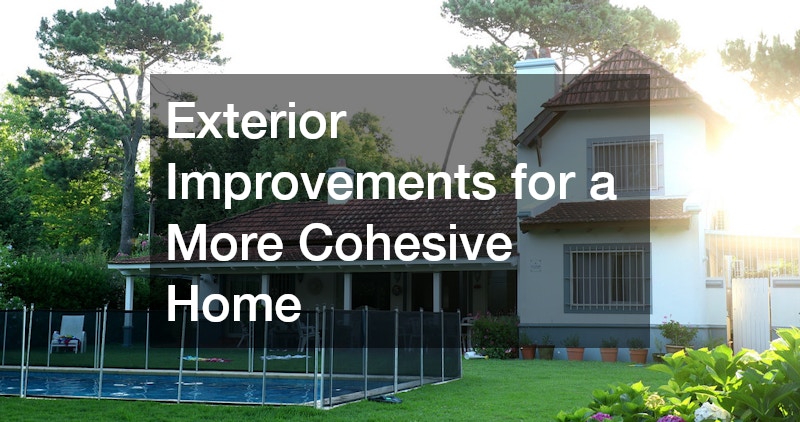
Creating a truly cohesive home exterior is about far more than picking a flattering paint color or planting a few flower beds. It requires an intentional, step-by-step approach that connects every architectural element, structural feature, and surrounding landscape into a single, unified visual statement. When various outdoor components are designed independently without a overarching vision, a house can quickly look disjointed, clutched together by mismatched eras, textures, and finishes. By taking a holistic approach to your property’s exterior, you can elevate your curb appeal, increase your home’s total overall value, and create an inviting atmosphere that begins the moment anyone approaches the property line.
Achieving a harmonious design requires paying close attention to materials, color palettes, and proportional scales across your entire site. The goal is to ensure that your main structure, entryway, hardscaping, surrounding structures, and outdoor living zones feel as though they were crafted by a single master designer. Whether you live in a classic traditional home, a mid-century residence, or a sleek contemporary build, aligning your exterior finishes will transform your property into an integrated sanctuary.
Harmonizing Your Architectural Openings

The windows and doors of your home act as its visual eyes and natural focal points, anchoring the rest of your exterior design choices. When these features conflict with the overarching style of your siding or entryway, the entire home can feel unbalanced. Achieving architectural continuity starts with choosing openings that speak the exact same visual language.
Selecting Windows That Frame Your Architectural Style
Windows occupy a massive portion of your facade, making them critical for defining your home’s aesthetic tone. To create continuity, look for window profiles that complement the historic or modern lines of your structure. For instance, double-hung windows with traditional grid patterns suit colonial or craftsman homes, while large, dark-framed casements instantly elevate modern farmhouses and modern design styles. Partnering with a reliable local window company allows you to explore energy-efficient frame materials, sightlines, and glass options tailored specifically to your home’s unique proportions and climate needs.
Beyond the frames themselves, consistency in trim color and style across all sides of your house builds a polished look. Avoid using one style on the front facade and an entirely different style on the back or sides, as this disrupts visual flow. Matching the finish of your window frames with your home’s accent trims creates an instant, subtle thread that pulls the whole exterior together smoothly.
Upgrading Your Entryway with Tailored Doors
Your front entry serves as the main focal point of your facade, setting the stage for what guests experience inside. Installing custom doors allows you to tailor architectural details, hardware finishes, and glass inserts to mirror the exact geometric lines and timber tones present throughout your exterior. A beautiful solid wood door with sleek iron accents can bridge the gap between heavy stone siding and lighter painted trim, acting as a natural transitional piece.
When selecting an entry system, consider how the scale and color harmony interact with surrounding porch elements. A vibrant, bold door color can provide a striking accent, but the profile and physical weight of the door should align with your window casings and porch pillars. Aligning panel designs, metal hardware finishes, and wood undertones creates an effortless pathway from the driveway straight to your threshold.
Elevating Curb Appeal Through Driveways and Walkways

Driveways and front walkways cover substantial surface area in any front yard, making them major contributors to your overall curb appeal. When these ground-level surfaces look weathered, cracked, or misaligned with the home’s primary palette, they draw attention away from your architectural upgrades.
Enhancing Ground Surfaces with Paved Finishes
The surface beneath your vehicle sets the baseline tone for your front yard’s hard surface design. A smooth, well-maintained asphalt driveway offers a clean, dark background that makes bright siding colors, white trim, and lush green lawns pop with dramatic contrast. Its simple texture ensures that the architectural features of the main house remain the primary center of attention without unnecessary visual clutter.
Working alongside a reputable local paving company ensures that your driveway features proper slope, seamless drainage, and sharp, clean borders that line up directly with your home’s physical footprint. Adding stone or brick borders along the edges of the drive can instantly connect the driveway to your entry path, turning a utility surface into a cohesive design element.
Restoring and Refining Concrete Pathways
If your property features extensive concrete flatwork, aging or uneven surfaces can shatter the clean lines of an otherwise beautiful front elevation. Professional concrete driveway resurfacing service provides a cost-effective way to restore tired pathways while introducing modern textures and integral colors. Stamped or stained concrete finishes can mimic natural slate or brick, linking your driveway directly to your porch, foundations, or garden walls.
To keep the look consistent, match the undertones of your resurfaced paths to your home’s primary accent colors. Cool gray concrete aligns beautifully with modern, blue, or crisp white homes, while warm beige and sand tones harmonize with rustic stone or warm wood siding. Unifying all flat ground surfaces creates a smooth visual runway that guides the eye naturally toward your front entrance.
Integrating Functional Outbuildings and Overhead Doors

Detached garages, attached vehicle bays, and outbuildings are significant massing elements that must align with the main residence to maintain overall aesthetic unity. Leaving these functional zones unstyled can make them feel like afterthoughts that diminish your home’s total impact.
Aligning Overhead Garage Panels with Exterior Siding
Because overhead doors often face the street directly, they make up a massive percentage of your home’s visible front profile. Upgrading to high-quality residential garage doors that feature complementary panel designs, matching window inserts, and coordinated paint colors instantly locks the garage into the main house’s visual ecosystem. Carriage-house styles with decorative iron handles work wonders on traditional homes, while flush, wooden-slat panels best suit minimalist architecture.
To maximize harmony, paint or stain your overhead doors to match either your main siding, your trim, or your front entry door. If your garage faces the street prominently, choosing a neutral shade that blends into the siding prevents the garage bays from overpowering the main front entry, keeping the primary focus on your front door.
Creating Unified Secondary Outbuildings and Accessories
Storage sheds, workshops, and detached carports should look like mini extensions of your main dwelling rather than isolated structures. Replicating the roof pitch, shingle type, siding material, and trim detailing on all secondary buildings binds the property together into a single, comprehensive estate layout.
Accessories such as exterior light fixtures, cupolas, and house numbers should also follow a consistent style language across every building on the lot. Choosing a single metal finish, such as matte black or oiled bronze, for every light fixture across your main house, garage, and detached sheds creates an elegant, professional touch that ties every corner of your lot into one cohesive plan.
Framing the Property with Cohesive Boundaries

Property borders define the spatial limits of your yard, offering a distinct backdrop against which all your home improvements will be viewed. High-quality perimeter features frame your home gracefully while protecting your privacy and defining functional outdoor rooms.
Defining Perimeters with Structural Fencing
A perimeter fence should never feel like a plain barrier dropped onto a property without thought. Hiring skilled fence contractors allows you to design custom boundary solutions that reflect the exact height, materials, and design motifs found on your main house. A crisp white picket fence perfectly caps off a traditional cottage, while black metal horizontal slats complement a modern structure.
To maintain visual cohesion, ensure the height and weight of your fencing feel proportional to your house and landscape. Repeating details, such as matching the post caps to your porch railing posts or matching the timber stain to your front door, makes the fence feel built specifically for your property rather than bought off the shelf.
Incorporating Durable Hardscaping Along Property Lines
Combining your perimeter fences with structural stone or masonry walls adds rich depth, texture, and permanent strength to your boundaries. Professional hardscaping services allow you to construct low retaining walls, pillared entry gates, and raised planting beds using natural fieldstone, brick, or manufactured masonry. Using stone materials that match the foundation or chimney of your main house creates immediate harmony across the entire yard.
Integrating integrated lighting along these boundary walls further reinforces your property’s overall shape after dark. Low-voltage cap lights cast a warm glow downward, accentuating the natural textures of the stone while clearly defining your outdoor boundaries, adding both visual grandeur and security.
Connecting Architecture and Nature Through Landscape Planning
The natural environment surrounding your house acts as the living, growing frame for your entire architectural composition. A thoughtful landscape plan connects hard surfaces to softness, blending structural materials gently into the natural environment.
Building Structural Pathways and Patios
Living zones like patios, garden paths, and terrace levels serve as the transition space between your indoor spaces and open grass areas. Crafting these areas with paver stones offers incredible flexibility in pattern, color, and texture, allowing you to build rich visual transitions. Arranging pavers in classic patterns like herringbone or running bond creates a tailored, timeless floor that echoes your home’s indoor flooring layout.
Select paving shades that complement the main undertones of your home’s siding and roof shingles. If your home features warm brick, choose neutral stone colors that allow the brickwork to shine without competing for attention. Extending these paved surfaces from your back patio around to your side paths ensures every outdoor area feels connected.
Designing Softscapes That Complement Architecture
Plantings should be chosen and positioned to enhance your home’s best structural features while softening harsh corners and hiding foundation walls. Partnering with a skilled landscaper helps you curate a balanced mix of evergreen shrubs, perennial flowers, and ornamental trees that provide year-row visual interest, structural height, and seasonal color transitions without overwhelming your facade.
Placing lower plantings near the base of the foundation ensures that sightlines to windows and architectural trim remain clear and unobstructed. Layering plants by height, placing taller specimens near corners and shorter groundcovers near front walkways, creates a dynamic, natural gradient that directs movement toward primary entryways gracefully.
Creating Balance with Symmetrical Plantings and Focal Zones
Symmetry is one of the most effective tools for establishing visual cohesion across an expansive front or backyard layout. Matching planter urns on either side of a porch, balanced garden beds framing a central walkway, or matching trees framing the driveway instantly communicate order, balance, and intentional design.
Strategic focal points, such as a water fountain, a sculpted shade tree, or a stone fire pit, draw the eye through the yard in a controlled, pleasing rhythm. By repeating specific plant species, leaf textures, and flower colors across different garden beds, you create a harmonious landscape that binds every corner of your outdoor area together seamlessly.
Unifying Exterior Accents and Finishes
The final layer of exterior cohesion comes down to the smaller accent details that dot your facade and yard. While individual lighting fixtures, house numbers, and trim colors may seem minor on their own, collectively they establish the overall character of your property.
Standardizing Hardware, Metals, and Outdoor Lighting
Consistency in metal finishes across your entire property is a simple step that yields high visual rewards. Ensure that your outdoor wall sconces, hanging pendant lights, door handles, mailboxes, and house numbers share a matching or complementary metal finish. Mixing too many metallic tones, like polished brass, brushed nickel, and rustic iron, creates visual clutter that distracts from your architectural upgrades.
Outdoor lighting should also be strategically designed to highlight architectural features, trees, and paths after sunset. Uplighting stone pillars, illuminating walkway borders, and casting gentle light on tree canopies brings your exterior cohesion to life even in the dark, ensuring your property looks unified around the clock.
Choosing a Master Exterior Color Palette
A cohesive exterior relies heavily on a restrained, well-curated color strategy. Stick to a master palette consisting of three core shades: a primary body color for siding or masonry, a secondary trim color for window frames and eaves, and an accent color reserved strictly for doors, shutters, or decorative details.
When picking your palette, take inspiration from fixed, non-painted elements that will remain long-term, such as stone foundations, brick chimneys, or asphalt roof shingles. Drawing secondary colors from the subtle flecks of gray, brown, or red found in your natural masonry guarantees that every new coat of paint or updated feature feels rooted in the site’s existing natural materials.
Maintaining Your Cohesive Exterior Investment
Investing in beautiful exterior upgrades is an exciting journey, but long-term harmony requires ongoing care and maintenance. Weathering, dirt build-up, overgrown vegetation, and sun exposure can slowly erode the sharp, clean lines and balanced colors of your hard work over time.
Establishing a routine seasonal maintenance checklist preserves the crisp aesthetic of your property. Power wash driveways, walkways, and siding annually to keep colors vibrant and dirt-free. Inspect caulking around window frames and door trims to prevent moisture damage, and touch up paint as soon as minor chipping occurs. Regularly trim back trees and bushes so they never obscure key architectural lines, front entries, or decorative lighting fixtures.
Ultimately, achieving a cohesive exterior design is about considering how every individual choice affects the bigger picture. From the structural surfaces beneath your feet to the details framing your doors and windows, every element plays a role in telling your home’s story. By making deliberate design choices and choosing complementary materials, you transform your house into an inviting, harmonious home that stands out effortlessly in any neighborhood.